

Intracytoplasmic Sperm Injection (ICSI)
What is intracytoplasmic sperm injection?
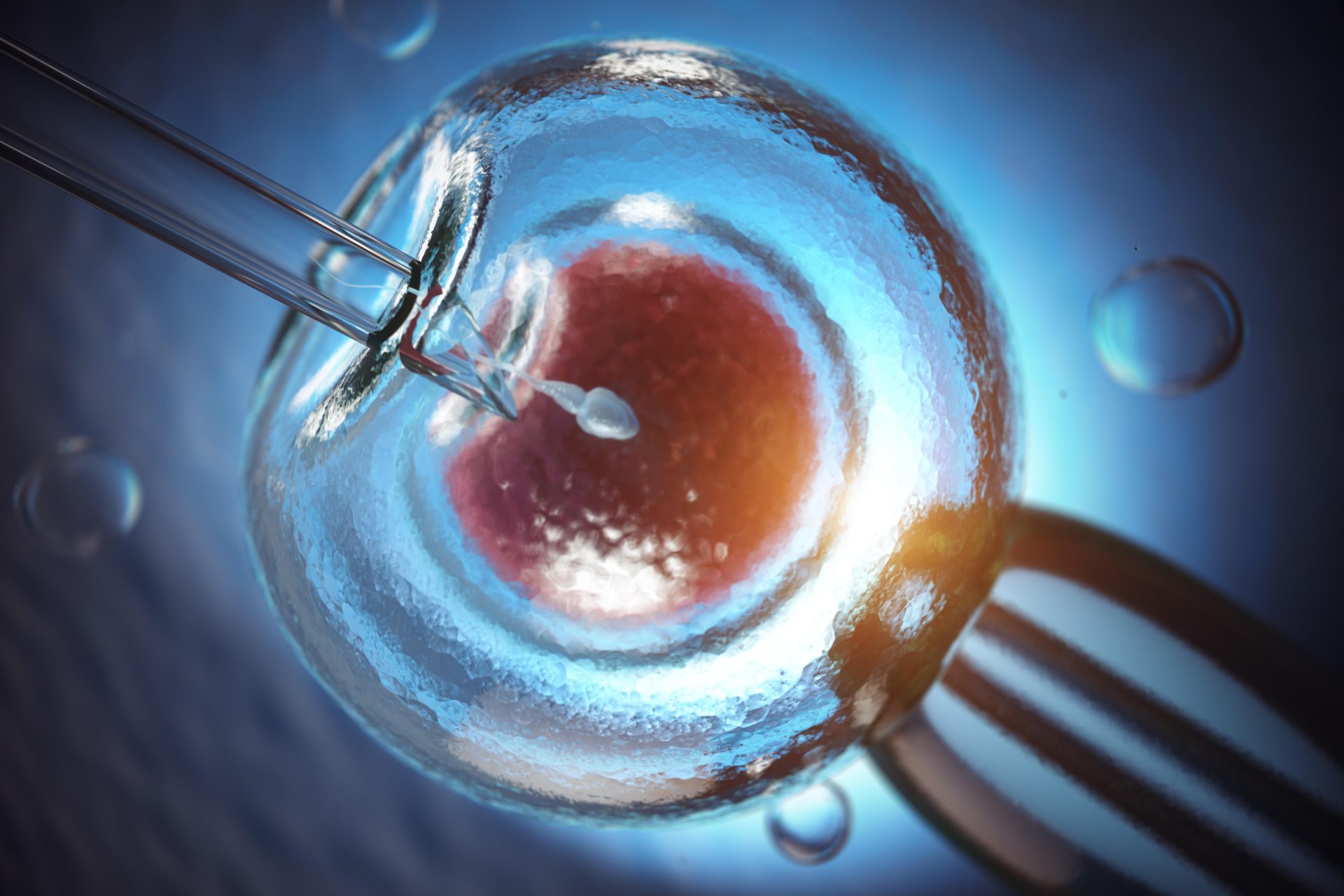
Intracytoplasmic sperm injection (ICSI) is a laboratory technique in which an embryologist selects a sperm cell under a microscope and injects it directly into a mature egg using a fine laboratory pipette.


Who needs to undergo ICSI?
ICSI may be recommended when semen parameters or previous fertilisation results make conventional IVF less suitable. Examples of such cases include:
- Patients with low sperm count, low motility, or low number of morphologically normal sperm, or a combination of the above
- Patients whose sperm lack an acrosome (which is necessary for natural penetration of sperm into the egg)
- Patients who cannot ejaculate or exhibit retrograde ejaculation
- Patients where sperm collection is performed directly from the testes or epididymis by aspiration or biopsy (e.g., in obstructive or non-obstructive azoospermia)
- Patients undergoing IVF after egg cryopreservation
- Patients undergoing preimplantation genetic testing
Also, ICSI may be indicated in:
- Patients in whom the use of classical IVF resulted in low fertilisation rates
- In cases of using donor sperm (either due to sperm quality or to reduce the quantity of sperm to be thawed and used)
What procedure is required for ICSI?
As with classical IVF, before ICSI the following stages are required:
1) Ovarian stimulation with medications to develop and collect more than one egg. Collecting several eggs, when feasible, can increase the number available for fertilisation and embryo development., and modern stimulation strategy involves attempting to collect as many eggs as possible using patient-friendly stimulation protocols. Typical ovarian stimulation usually lasts 10-12 days (8-14 days).
2) Monitoring: During stimulation, typically 2-3 visits to the Fertility/Reproductive Medicine specialist will be needed for hormone tests (a blood sample) and ultrasound scans (transvaginal ultrasound). These tests allow the physician to check that ovarian stimulation is progressing normally and estimate the number of eggs to be retrieved.
3) Completion of stimulation and egg retrieval: When the physician observes on ultrasound a group (usually >2) of follicles of adequate size (usually ≥17mm in mean diameter), final oocyte maturation proceeds with administration of a final injection. Egg retrieval is usually performed 36 hours (34-38 hours) after this injection. Egg retrieval is usually performed under sedation to minimise discomfort., and usually lasts 20-40 minutes. It involves retrieving eggs under ultrasound guidance through a relatively thin needle that passes through the thin vaginal wall and aspirates fluid from each follicle. After egg retrieval, patients may feel some discomfort similar to menstrual cramps and may have a small amount of vaginal bleeding. These symptoms usually resolve completely within 24-48 hours.
After egg retrieval, the surrounding cumulus cells are removed in the laboratory—a process called denudation—so that ICSI can be performed. Removal of cumulus cells (denudation) is performed in the laboratory either chemically or mechanically.
The next step is to assess egg maturity, which is done 1-4 hours after egg retrieval. Mature eggs are those that have already extruded the first polar body and are at the metaphase II stage. These eggs are ready to be fertilised by sperm. Eggs that are not mature cannot be used for ICSI.
At the same time, sperm processing is performed to find morphologically normal and motile sperm. This process can be particularly time-consuming, especially if the number of such sperm in the semen is very small. Once the appropriate sperm is found, it is immobilised and drawn into a fine glass micropipette and then carefully injected into the mature egg. The process of injecting the sperm into the egg usually takes 1-2 minutes per egg.
What are the ICSI success rates?
The success of ICSI is initially assessed by evaluating the number of eggs showing signs of successful fertilisation 16-18 hours after ICSI. Generally, we expect approximately 65% of eggs to have been successfully fertilised, although these rates may differ depending on sperm quality, egg quality, and the technical skill/experience of the embryologist who performed the ICSI.
Is ICSI safe?
ICSI is an additional, highly technical step in the IVF procedure (a form of microsurgical intervention on the egg), and therefore there is a theoretical risk of egg damage from manipulations during intracytoplasmic sperm injection. Most studies conducted, however, show that in the hands of properly trained embryologists, the procedure is associated with a low risk of damage to the egg when performed by trained embryologists.
However, large epidemiological studies indicate that children born after ICSI have a slightly increased risk of certain urogenital abnormalities. In a small proportion of cases, this may reflect genetic factors associated with severe male-factor infertilityrather than the ICSI procedure itself.
Recently, however, new scientific evidence suggests that the ICSI procedure itself may also be partially responsible for a small increase in the risk of congenital anomalies. For this reason, ICSI use should only be performed when there are clear medical indications and the benefits outweigh the small theoretical risks.
In conclusion, the ICSI procedure has been used for more than 30 years and has helped millions of couples to have a biological child of their own. It is a highly valuable and safe method when used for appropriate medical reasons by experienced personnel.